-

Don’t make me think… like a designer
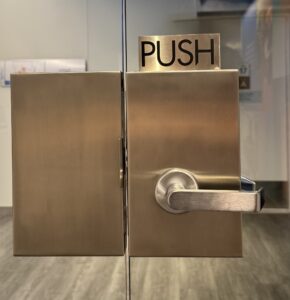
You walk up to a door with a big handle that clearly says pull. So you pull. Nothing happens. Then you notice the tiny sign that says PUSH. That moment is small, but it stays with you. You hesitate. You feel a little foolish, even though the problem was not you. The design told you…
-

Establishing a spoon theory policy at Intuit
Most people don’t think about their energy. Day’s are full of physical and cognitive activities, stress, and challenges. If we need a boost, we grab some coffee or rest our eyes for a few minutes. After a bit, we’re ready to jump back in. But many people don’t have endless energy supplies. Physical, cognitive, and…
-

Impressions from the Zero Project 2026 Conference in Vienna
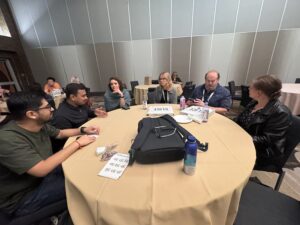
I was invited to join the Zero Project Conference in Vienna this year, and I was proud to represent both Intuit and the Magical Bridge Foundation. Across three days, I saw a wide range of disability-focused work, but the strongest message was consistent: accessibility moves forward when disabled people are treated as leaders, not just…
-

Using Maturity Models to Build Accessibility That Lasts
Accessibility work often starts with urgency. A customer complaint, a legal requirement, a failed audit, or a team member raising their hand and saying, “This isn’t working for everyone.” Those moments matter, but urgency alone doesn’t create durable change. What sustains accessibility over time is structure, shared understanding, and a clear sense of progression. This…
-

How to Tell Better Accessibility Stories with Data (and AI)
Accessibility work often happens behind the scenes – design thinking sessions, backlog refinements, bug fixes that never make the release notes. Because that effort is invisible, it’s easy for accessibility to be misunderstood, deprioritized, or treated as a checkbox. But when you pair data with narrative, accessibility becomes visible, meaningful, and aligned with shared goals.…
-

Building the Brain of Your Accessibility AI
Preface This document reflects the most accurate guidance I can offer today, based on the current state of accessibility standards, AI tooling, and real-world practice. Both accessibility and AI are evolving quickly. As models improve, platforms change, and new standards emerge, some of the details and recommendations here will need to adapt. The core principles—intentional…
-

AI Prompt: Have Gemini summarize your folders
I wasn’t a big fan of Gemini until the latest version and now it’s become a key part of my workflow at Intuit. A key advantage is the native inclusion with Google Drive. Marco Salsiccia is our mobile accessibility expert and has created numerous folders of videos showing the screen reader experience in different applications.…
-

Don’t Change the Company—Reflect It
Aligning Accessibility with What Already Matters Every company has its own personality. It might be obsessed with speed, driven by design, led by customer feedback, or focused on data. The identity shapes how decisions get made—and if you want accessibility to last, it has to fit right in. I’ve seen accessibility efforts succeed (and survive)…
-

Inclusive AI Isn’t New—But How We Use It Matters More Than Ever
Artificial intelligence might feel like the hot new thing—but for folks working in accessibility, AI has been quietly powering essential tools for decades. Whether it’s reading a street sign out loud, helping someone navigate indoors, or turning spoken words into text, inclusive technology has always been one of the proving grounds for AI. That’s why…
-

From “I” to “We”: Building Lasting Accessibility by Letting Go
When we think about leadership, we often picture a single person standing at the front of the room, confidently sharing big ideas and inspiring the crowd. We imagine a strong individual leading the charge, driving change through personal determination and charisma. But if there’s one lesson I’ve learned from years of working in accessibility and…
On My Bookshelf
- Demystifying Disability
- Braiding Sweetgrass
- Living the California Dream
- Enabling Acts
- The Design of Everyday Things
- Universal Design for Web Applications
- Extra Bold
- No Need for Sight When You Have a VISION
Pages
Tags
- March 2026
- February 2026
- January 2026
- December 2025
- July 2025
- June 2025
- April 2025
- March 2025
- September 2024
- July 2024
- August 2023
- September 2022
- July 2022
- May 2022
- October 2019
- September 2018
- March 2018
- August 2017
- March 2016
- February 2016
- November 2015
- February 2015
- February 2013
- January 2013
- June 2010
- June 2006
- January 2006